The legal protection of land rights of the indigenous pygmy remains a concern in the Democratic Republic of the Congo. In spite of some of the applicable international and national laws that govern the land rights of indigenous peoples in the country, it has been the major challenge in the applicability of which the absence of a national policy adequate seems to be one of the key challenges in its execution.
Historical Context and Theories of Dispossession
Based on PROSPER NOBIRABO, M (2008) in his work on the "dispossession of indigenous land rights in RD Congo : historical perspectives and future", of its word of the introduction, the author mentions that researchers say well before the Berlin Conference in 1885, several european traders, missionaries, etc ; lived on the current territory of the DRC.
Some would have gained legal titles to be in good and due form, giving them the right to occupy these lands. Others would be installed under some theories of international law prior to the Seventeenth century, considering Africa as a "terra nullius", this Latin expression meaning : a piece of land or territory which does not belong to anyone, that is to say, a well without a master, where each could be carried out to settle without a legal basis being required.
The occupation of the soil as the main object only came later and, in particular, when the european powers wanted to recognize their right of sovereignty ; It is then that have been entered into numerous treaties, either with traditional leaders Bantu, nilotic sudan, between the european powers, they are characterized by misunderstandings about the nature of the rights transferred ; whereas it was rather a permission to occupy land to the traditional leadership of the congolese.
The europeans dealt most often with the dominant ethnic groups in society, to the detriment of minorities and indigenous bacwa, the bambuti or batwa. During the negotiations, no one has sought to know if for the "pygmies" the ground was inalienable, and what were the real powers of the traditional leaders bantu, nilotic and sudanese on the territories of the congolese at the time.
In the various treaties, the transferor congolese was designated by the words "chief", which was under the mistaken impression that the political structures of traditional congolese were prioritized as those of the europeans. The principle of the sovereignty of european assumed, incorrectly, that these traditional leaders could commit the entire territory. However, the indigenous communities were located outside the sphere of power of the traditional leaders. It is in this confusion that in 1885, king Leopold II of the Belgians, has created the Congo free State, a territory consisting of the possessions of the International Association African, that was his property, whereas two million years ago, the peoples of pygmies lived in the territory of the congolese ; Thus, they were the first occupants, and lived by gathering and hunting.
The waves of migration of other groups (Bantu, Nilotic and Sudanic) to this part of Africa have taken place in the course of the second millennium before Christ, and the latest took place between the Seventh century before Christ. These new communities, such as the Bantu, the Nilotic and the Sudanese, have always belonged to structured societies, the leaders of which came from ancient lines of heads-the chiefdoms.
Lack of Land Ownership and Continued Marginalisation
Indeed, the lack of ownership of land among the indigenous peoples "Pygmy" is the result of the historical fact of their occupation of the forest where, according to the tradition of hunter-gatherers in central Africa, the land rights were recognized neither under customary law, nor under written law. The hunter-gatherer societies are regarded as falling under the jurisdiction of the dominant groups who have claims on the same land. Moreover, the invisibility of indigenous people's land rights from the point of view of customary law and written law has meant that they have not received compensation or land replacement when they were expropriated from their lands for agricultural, conservation, industrial agriculture development or pastures.
The Pygmies, who reside mainly in the DRC, were historically inhabitants of the forests, dependent on hunting and gathering for their subsistence. However, their life took a dramatic turn when the colonial authorities in belgium enacted a law in 1925 creating national parks and promoting tourism in the region. As a result, the pygmies were driven by force from their ancient forests, without any compensation for their land. These spaces, once sacred and abundant, are now prohibited areas, changing forever the way of life of the pygmies.
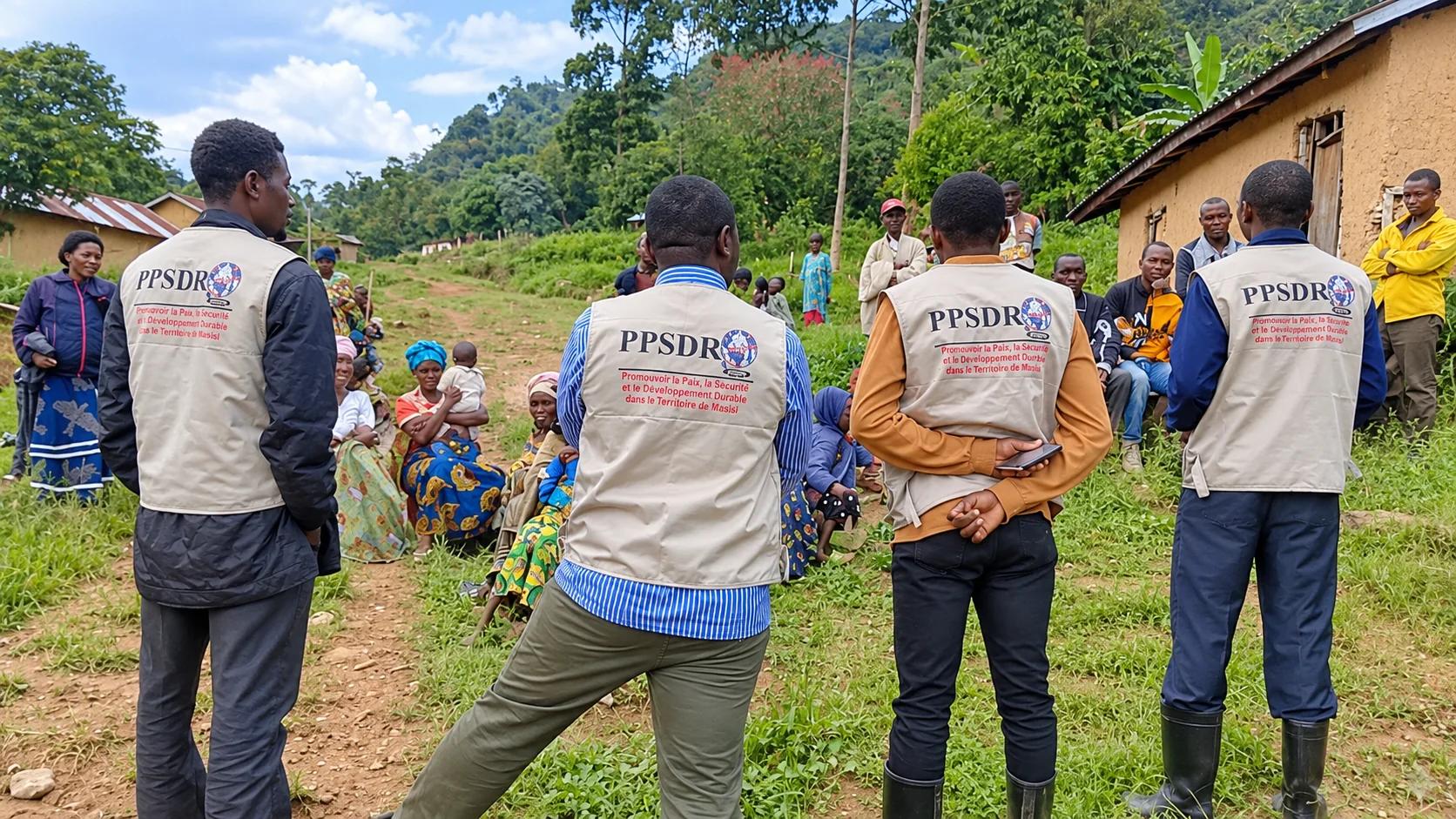
Faced with displacement and deprivation of land, the Pygmies have become nomads, struggling to survive without resources. Isolated from other communities, they have experienced social exclusion, and have often been caught in conflicts related to land and forest. PPSDR has recognized that the integration of the Pygmies into society was crucial, not only for their well-being but also to foster a peaceful coexistence.
A major barrier to the inclusion of the Pygmies has been their historical marginalisation and lack of advocacy on their behalf. Although they are the first inhabitants of the country, they are left speechless and deprived of the opportunity to express their views and to participate in national debates. The lack of education among native pygmies has even more hampered their ability to have leaders who can represent them effectively with the public authorities.
For decades, since the independence of the Democratic Republic of the Congo in 1960, until the year 2022, the government has not recognized the Pygmies as citizens, which has led to the neglect of their basic rights, including access to health care, education and justice.
This situation affects not only the pygmies of the congo, but also the whole of Africa in general, as in Rwanda, these indigenous peoples "Pygmies" who lived in the forest of Gishwati, the Volcanoes Park and conservation areas of the forest of Nyungwe in Rwanda, have not received compensation, neither for the land from which they have been expropriated, nor for the destruction of their culture and their food resources.
At present, indigenous peoples are one of the most disadvantaged ethnic groups in the Great Lakes region in terms of land ownership.
Indigenous peoples have a culture, a way of life, traditions and customary law of their own. Unfortunately, they are often victims of conflict, discrimination and oppressive working conditions. The indigenous pygmy peoples have not always enjoyed attention as an aboriginal group. Abandoned in the process of social integration of national communities, their living conditions are characterized by various forms of abuse and stigma on the political, administrative, economic, social and cultural levels.
The international community has now accepted the principle according to which cultures, ways of living, traditions and customary laws of indigenous peoples are precious and need to be respected and protected, and that these people should participate in the decision-making processes of the countries in which they live.
The Convention n°169 adopts a general attitude of respect for the cultures and ways of life of indigenous peoples, insisting on their right to continue to exist and develop at the pace dictated by their own priorities.
It provides for consultation and participation of indigenous peoples each time policies and programmes are proposed that could have an impact on them (Coperaziona Italiana, et al.: Les droits des peuples autochtones instruments et bonne pratique. 2006, p.23).
Problems Faced by the Indigenous Pygmy Peoples in Matters Relating to Land
Problems faced by the indigenous pygmy peoples in matters relating to land in the Democratic Republic of the Congo throughout history include :
Land grabbing The ancestral lands of the pygmy peoples are often coveted by extractive companies, commercial farmers or other economic actors. These companies often exploit the natural resources on these lands, leading to environmental degradation and the forced displacement of pygmy communities.
Forced eviction Pygmies are often evicted from their ancestral lands by government authorities or other powerful groups. These evictions are often carried out without consultation or consent of the pygmy communities.
Exclusion from decision-making processes The pygmy peoples are often excluded from the decision-making process regarding land use. They are not consulted or involved in decisions regarding the allocation of forest concessions, mining or other development projects that directly affect their land and their way of life.
Stigma and Discrimination The pygmies are often victims of discrimination and stigmatization, which weakens their position in land disputes. Their culture and tradition are often poorly understood and undervalued, which makes it difficult for them to defend their land rights before the courts or competent authorities.
This problem persists in spite of laws and international commitments to protect the land rights of indigenous peoples, including the pygmies. It is therefore essential to implement concrete measures to ensure the recognition and protection of the land rights of the indigenous pygmy peoples as well as their effective inclusion in decision-making processes pertaining to their ancestral lands.
The insecurity of land tenure Access to their ancestral land and security of land tenure are fundamental issues for the indigenous pygmy peoples. These communities have close links with the forests upon which they depend for their well-being, identity and survival. The activities of agriculture, livestock, and both artisanal and industrial wood exploitation have, over the centuries, forced many of these peoples to abandon their forests and traditional way of life based on hunting, gathering, and collecting. As a result, most of these peoples have become dependent on casual work, or have had to resort to begging to survive.
In addition, the forced eviction of the indigenous pygmy peoples from their ancestral lands in order to create national parks began during the colonial period, with the royal decree of 1925 creating the Virunga National Park. It continued after the independence of the DRC, with the creation of the National Park Kahuzi-Biega (PNKB) and Maiko. Between the 1960s and the early 1980s, approximately 6,000 Twa were forcibly evicted from their ancestral lands in the hills of Chatondo, Katasomwa, Munango, Kabona, Kakumbukumbu and Bukulula; spaces today erected into the National Park Kahuzi-Biega, situated between the territories of Kabare, Kalehe and Shabunda in South Kivu province. At its creation, the National Park Kahuzi-Biega had an area of 60,000 hectares, but its extension in 1975 increased its area to 600,000 hectares. This extension stripped the indigenous pygmy peoples of their lands without consultation, without consent, and without fair and equitable compensation, in violation of international law and congolese expropriation statutes.
The lands of indigenous pygmy peoples have also been dispossessed for the implementation of extractive industry projects, often in violation of national consultation laws and the right to free, prior and informed consent. For example, concessions were installed on and adjacent to ancestral lands without consultation or consent, such as the concession of BBC and ITB (Wood Processing Industry) in Ingende and Bikoro in Equateur province. Concession operators operate without taking account of indigenous rights and without communities receiving benefits. Furthermore, despite the conversion of titles of SODEFOR in Maindombe district (Bandundu province), indigenous pygmy peoples of Inongo, Kiri and Oshwe territories remain victims of improper forest exploitation. Dispossession of ancestral land is at the root of the loss of traditional culture. Living conditions are extremely precarious due to poverty and vulnerability. Although the DRC voted in favour of the UN Declaration on the Rights of Indigenous Peoples in 2007, concrete protective measures have lagged (BARUME, A.K., En voie de disparition ? Les droits des autochtones en Afrique : le cas du Parc National de Kahuzi-Biega en RDC, 2003, p. 35).
Omission of the Land Rights of the Pygmies by Outstanding Reforms
Since independence, neither the Constitution, nor the 1973 Land Act, nor the 2002 Forest Code makes any mention of indigenous pygmy peoples and their rights.
Current initiatives related to land and forest governance fail to take into account their viewpoints or ensure active participation. The forest zoning process underway in the DRC does not provide any mechanism for identifying and protecting indigenous territories.
Multilateral initiatives like REDD+ and the EU FLEGT Action Plan represent commitments that may yield negative impacts for indigenous peoples if the DRC government continues to overlook their land rights without enacting special protective measures.
Beyond classified zones, community reserves can lead to expropriation of traditional lands without free consent. The creation of protected areas has frequently come at the expense of forest communities, resulting in forced displacement, denial of basic subsistence, and police surveillance leading to serious human rights violations (e.g. low-altitude areas of Kahuzi-Biega in Itebero, and the primate reserves of Kisimba-Ikobo and Tayna Community Reserve).
The Problems of Non-Access to Justice
In spite of Article 12 of the 2006 Constitution providing that all Congolese are equal before the law, and Article 150 establishing the judiciary as guarantor of fundamental rights, access to justice remains elusive for indigenous pygmies. Illiteracy, unfamiliarity with official languages, lack of legal information, geographic remoteness of courts, financial barriers, and judicial bias constitute formidable obstacles.
"Before, in the forest, we had everything we needed for an easy and happy life: food, shelter, medicines, clothes." — Mr BAHIDIKA BALEKE, Pygmy representative, Eastern DRC.
"Today, the pygmies have lost their bearings and their means of subsistence; as a material and spiritual refuge, source of religion, medicine and cultural identity, the forest cannot be underestimated. The close links they have with the forest they venerate and protect for generations is a central element of their identity." — Survival International.
The Legal Turning Point: Law No. 22/030 of 15 July 2022
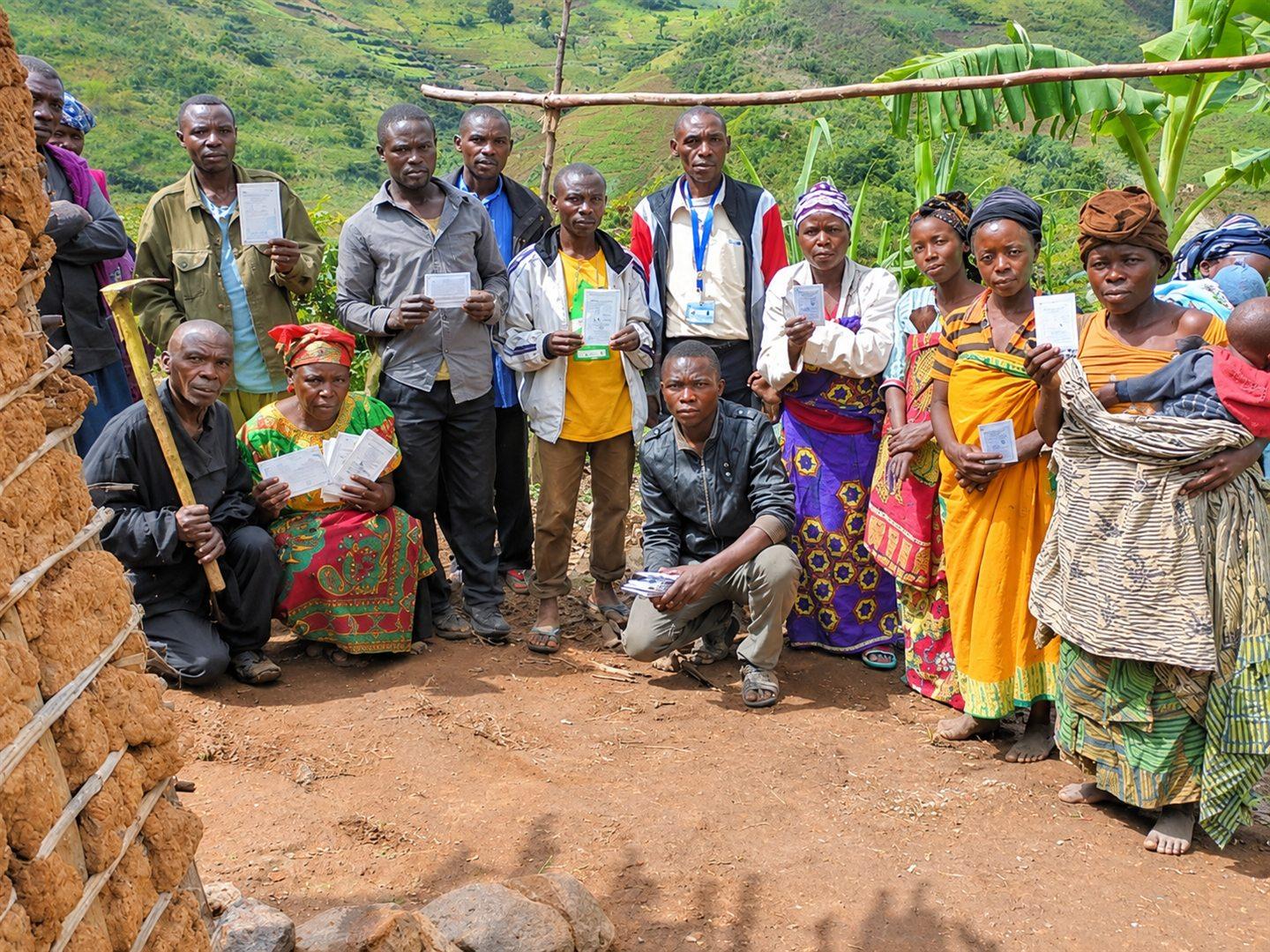
Under the presidency of Félix Antoine Tshisekedi, the promulgation of Law No. 22/030 of 15 July 2022 on the protection and promotion of the rights of indigenous pygmy peoples marked a decisive legal advance. Article 48 explicitly provides that the Congolese State grants recognition and legal protection to the lands and resources traditionally occupied and used by indigenous pygmy peoples.
Article 42 stipulates that indigenous pygmy peoples have the right to lands and natural resources they possess, occupy or use, and that no relocation can take place without free, prior, and informed consent. Article 47 establishes their right to equitable benefits from commercial exploitation by third parties under agreed terms of reference.
Recommendations and Advocacy to the Congolese Government
In light of the multiple land rights violations faced by indigenous pygmy peoples in the DRC, and to ensure the genuine operationalisation of Law No. 22/030 of 15 July 2022, PPSDR recommends that the Congolese Government :
- Support a nationwide popularisation campaign of Law No. 22/030 across all territories of the country ;
- Ensure land restitution and compensation for Pygmy communities to provide dedicated spaces for cultural preservation, housing, and agricultural development ;
- Establish a dedicated governmental department specifically mandated to address indigenous peoples' concerns while safeguarding their minority identity and culture.
Article published in Goma, April 10, 2024 by PPSDR, a mentoring organisation for indigenous pygmy peoples in the Democratic Republic of the Congo ; Drafted by Enoch MUHINDO MUTHETHE, Coordinator and Founder of PPSDR.
For more information on PPSDR, visit : www.ppsdr.org — Contact us : ppsdrongdasbl@gmail.com